Flash USDT: How to Create and Use It Effectively
Key takeaways
- Flash USDT is an ERC20 token created via smart contracts on Ethereum-compatible networks.
- ChainIDE and MetaMask are key tools for developing and managing Flash USDT.
- The process involves writing, deploying, and interacting with smart contracts securely.
- Do not send real funds to unverified contracts; always confirm addresses and code.
- Flash USDT creation is for educational and testing purposes, not financial gain.
Flash USDT is a method of creating a token that mimics USDT using smart contracts on Ethereum and compatible blockchains. It involves deploying an ERC20 token contract that can be interacted with through wallets like MetaMask. This approach is primarily educational and for testing, not for actual financial transactions.
The complete workflow for creating Flash USDT can be found on the official site https://sites.google.com/view/defiflashusdt, which provides the ChainIDE script and detailed instructions.
What Is Flash USDT?
Flash USDT is a custom ERC20 token designed to simulate USDT within a development or test environment. It allows developers and enthusiasts to experiment with token creation, smart contract interaction, and wallet integration without risking real funds. Flash USDT is not an official stablecoin but a token created for educational and testing purposes.
Tools Used: ChainIDE and MetaMask
ChainIDE is an online integrated development environment that supports Ethereum smart contract creation and deployment. It provides a user-friendly interface to write Solidity code, compile it, and deploy to test networks.
MetaMask is a widely used crypto wallet and browser extension that allows users to manage Ethereum addresses and interact with smart contracts. It connects to testnets or mainnets and facilitates transaction signing.
These tools together enable the full cycle of Flash USDT creation:
- Write or import the ERC20 token contract code.
- Compile and deploy the contract via ChainIDE.
- Connect MetaMask to the target network.
- Interact with the deployed contract from MetaMask, such as minting or transferring tokens.
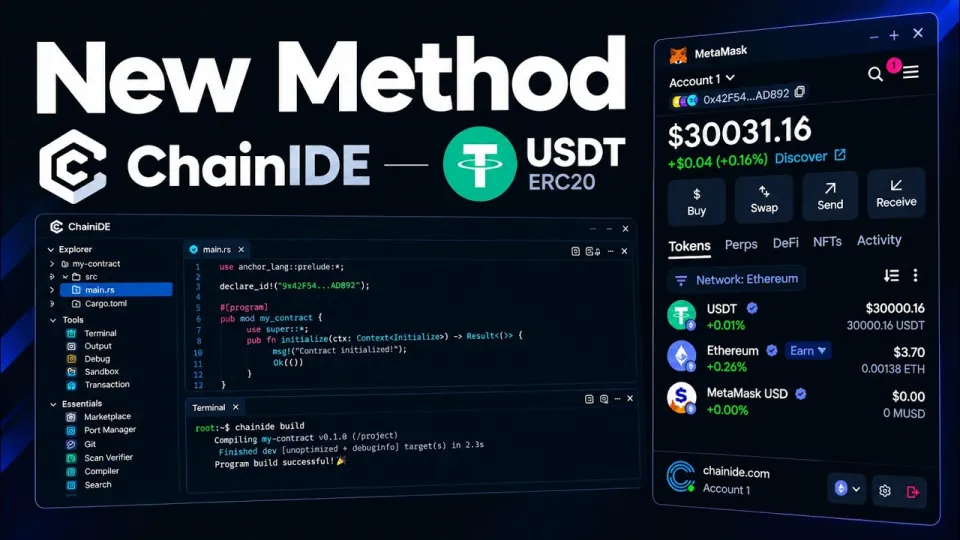
Video: How to Make Flash USDT | Working Method 2026
Understanding the ERC20 Token Structure
Flash USDT follows the ERC20 token standard, which defines a set of functions and events for fungible tokens on Ethereum:
- `totalSupply`: Returns the total number of tokens.
- `balanceOf`: Retrieves the balance of an address.
- `transfer`: Moves tokens from the sender to another address.
- `approve` and `transferFrom`: Allow delegated transfers.
The smart contract code used in Flash USDT includes these standard functions, ensuring compatibility with wallets and exchanges that support ERC20 tokens.
Step-by-Step Creation Process
Creating Flash USDT involves several key steps:
- Setup ChainIDE Account: Register or log in to ChainIDE to access the development environment.
- Import Script: Use the provided script from the official site to ensure correct token parameters.
- Compile Contract: Verify the Solidity code compiles without errors.
- Deploy Contract: Choose the Ethereum testnet or compatible network and deploy the contract.
- Connect MetaMask: Set MetaMask to the same network and import the contract address.
- Interact with Token: Mint test tokens, check balances, and transfer tokens within MetaMask.
This process helps users understand smart contract workflows and token management.
Important Precautions and Common Mistakes
When dealing with Flash USDT or any smart contract interaction, caution is paramount:
- Do not send real funds to unverified contracts or unknown addresses. Flash USDT is intended for testing.
- Verify Contract Source Code and Addresses: Always check that the contract address matches the deployed one and review the code if possible.
- Use Test Networks: Prefer networks like Ropsten, Rinkeby, or others supported by ChainIDE and MetaMask for safe experimentation.
- Check Transaction Details: Before signing any transaction, verify gas fees, recipient addresses, and function calls.
Common mistakes include deploying contracts with incorrect parameters, connecting MetaMask to the wrong network, or confusing test tokens with real assets.
Benefits and Use Cases of Flash USDT
Flash USDT provides an accessible way to learn about decentralized finance (DeFi) and token creation. Developers can:
- Experiment with ERC20 token code and features.
- Test decentralized applications (dApps) that use USDT-like tokens.
- Understand smart contract deployment and interaction workflows.
It also assists educators and learners in blockchain programming without risking capital.
Useful Links
- Official Flash USDT creation script and guide: https://sites.google.com/view/defiflashusdt
- ChainIDE platform: https://chainide.com
- MetaMask extension: https://metamask.io
Summary
Flash USDT is a practical way to create and experiment with an ERC20 token resembling USDT using ChainIDE and MetaMask. The method includes writing, deploying, and interacting with smart contracts on Ethereum-compatible test networks. This approach is strictly for educational and testing purposes to avoid financial risks. Users must exercise caution by verifying contract details and using testnets.
For a complete walkthrough and detailed script, visit https://sites.google.com/view/defiflashusdt.
This article is based on the detailed explanation and demonstration by the channel Rca FastPrint, which offers valuable insights on blockchain development and Flash USDT creation.
Source: How to Make Flash USDT | Working Method 2026 · Markdown version
Questions & answers
What is Flash USDT and how does it differ from real USDT?
Flash USDT is a custom ERC20 token created for educational and testing purposes, not an official stablecoin. It mimics USDT's functionality but is deployed on test networks without real value.
Which tools are required to create Flash USDT?
Creating Flash USDT requires ChainIDE, an online IDE for writing and deploying smart contracts, and MetaMask, a crypto wallet for interacting with those contracts on Ethereum-compatible networks.
Can I use Flash USDT tokens like real USDT for trading?
No, Flash USDT tokens are intended only for development and testing. They do not hold real monetary value and should not be used for actual trading or financial transactions.
What safety measures should I take when creating or interacting with Flash USDT?
Always use test networks, verify contract addresses and source code, avoid sending real funds to unknown contracts, and carefully review transaction details before signing in your wallet.