Meme Coin Trading With The World's Top Trader
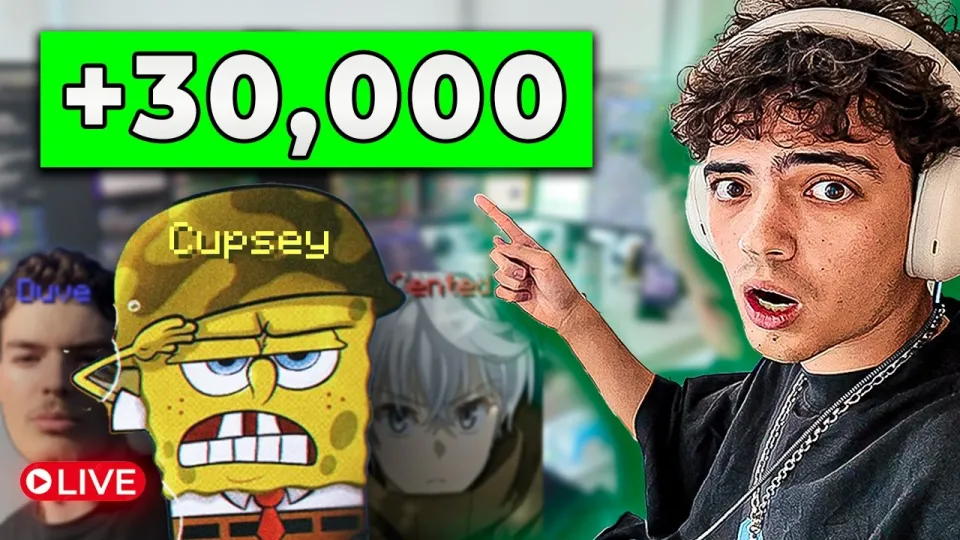
Video: I Traded With The World’s #1 Memecoin Trader
You can order the same kind of articles for your own video to boost it on YouTube and Google. Just message the Telegram bot @sat_sit_bot. It writes articles around your video, embeds the video and publishes them on popular niche websites (no ads). Try it free: 50 articles on us.
Key takeaways
- A meme coin is a token whose value rests on community attention and narrative rather than cash flow, revenue or a product roadmap.
- In the session, a trader known as Cupsey turned roughly 200 SOL on early trades in Lobo and a token called 1%, and about 80 SOL on Mosaic AI.
- One trade around Elon Musk's Grok bot reportedly netted about $15,000, while another position was described as a dev-linked "Magic Internet Money" play.
- The traders used a Solana trading terminal for execution, and viewers were pointed to a registration link for that terminal.
- Speed trading new pairs is the hardest style in the market: long screen hours, tiny position sizes and fast exits are the norm, not the exception.
A meme coin is a cryptocurrency whose price is driven by community attention, narrative and speculation rather than revenue, cash flow or a working product. Traders buy them on the expectation that hype will pull in the next buyer before liquidity dries up. The live session on Ethan Prosper's channel, where he traded alongside a guest known as Cupsey, shows both the upside and the mechanics behind it — execution on a Solana terminal such as Padre, fast entries and exits, and a lot of screen time.
What a meme coin actually is and how it differs from a utility token
A meme coin has no earnings statement; its value is a shared story. Dogecoin and Shiba Inu made the category famous, but the modern version lives mostly on Solana and launchpads like Pump.fun, where anyone can mint a token in minutes. Because supply is cheap to create, the scarce resource is attention: a name, a mascot, a joke, a well-known developer or a mention from a large account.
That changes how you evaluate a trade. Instead of asking what the project earns, a meme coin trader asks:
- Who is talking about it, and how fast is that conversation growing?
- How much liquidity sits in the pool, and can my size exit without moving the price?
- Who holds the supply — is one wallet sitting on 30% of the token?
- Is there a narrative that can survive more than a few hours?
Utility tokens are judged on adoption and tokenomics; meme coins are judged on distribution and momentum. Both can lose you money, but they fail for different reasons.
Inside the live session with Cupsey
The format of the video is a screen-share trading session rather than a lecture, and the numbers are the point. Early trades in Lobo and a token called 1% were described as producing around 200 SOL combined, and a later position in Mosaic AI added roughly 80 SOL. A trade tied to Elon Musk's Grok bot was reported at about $15,000, and a developer-linked "Magic Internet Money" play was covered as well. The guest's wallet and X profile were shared in the description, which is standard practice among traders who want their results auditable.
What the session does not show is the base rate. A recap highlights winners; the losing entries in between are usually cut. Treat a 200 SOL result as a demonstration of a method under favorable conditions, not as an expected return.
How top meme coin traders actually operate
Speed is the defining skill of this style, and it is built from process, not intuition. The traders in the video work from a terminal that aggregates new pairs, holder data and charts in one screen, because seconds matter when a token is minutes old. A typical workflow looks like this:
- Scan new launches filtered by liquidity, holder count and social links.
- Check the deployer wallet and the top holders before sizing a position.
- Enter small, often with a fraction of the bankroll, and set a mental or automated exit before buying.
- Scale out into strength rather than waiting for a round number.
- Accept that most entries go to zero and that one or two carry the day.
Position sizing is what separates survivors from statistics. If a single trade can wipe out a week of gains, the size is wrong regardless of how good the setup looks.
The risks nobody puts in a highlight reel
Meme coin trading carries risks that are structural, not incidental. The most common ones:
- Rug pulls and soft rugs. The deployer or early wallets dump on buyers; a locked liquidity pool reduces but does not remove the risk.
- Multi-wallet coordination. Groups can hold supply across many addresses to look decentralized while planning a single exit.
- Slippage and thin books. A token with $40,000 in liquidity cannot absorb a large sell without collapsing.
- Copy-trading lag. Following a wallet means you enter later and exit later than the person you copied, usually at a worse price.
- Survivorship bias. Public recaps show the trades that worked; the ones that did not are rarely posted.
A viewer comment under the video made the honest point: the traders on screen are full-time speed traders who spend ten-hour days in front of charts, and this is the most difficult style in the market. Being inspired by the results is fine; assuming the same results from an hour a day is not.
Common questions from viewers, answered
Several recurring doubts come up around videos like this. The first is about "faucets" — in trading slang, a faucet is a source of small, steady income, such as farming incentives or a stream of tiny trades, that funds riskier bets. The second is about access: private groups and paid communities are often mentioned, but the free material in a video description is usually enough to learn the mechanics.
The third is about starting capital. There is no minimum, but there is a practical floor: fees, slippage and gas on Solana mean that a bankroll under a few SOL leaves almost nothing after costs. The fourth is about style. Trading only brand-new pairs is one path; trading larger, more established tokens with deeper liquidity is slower but far more forgiving for someone learning the craft.
Useful links
- Trading terminal used in the session: https://trade.padre.gg/rk/prosper
- Ethan Prosper's links: https://ethanprosper.com
- Guest trader Cupsey on X: https://x.com/cupseyy
- Free Discord community: https://discord.gg/solmafia
- Paid community Pastel: https://www.joinpastel.com/r/ref=ETHAN
Bottom line
Meme coin trading is a attention-driven, high-variance game where execution speed, position sizing and risk control matter far more than picking the "right" coin. The session on Ethan Prosper's channel is a useful look at how professional speed traders work — terminal setup, fast entries, quick exits and a tolerance for many small losses — but it is a highlight reel, not a track record. If you want to try the style, start with money you can lose entirely, use a terminal you understand, and treat every public result as a demonstration rather than a promise. You can register for the terminal used in the video here: trade.padre.gg/rk/prosper.
Source: I Traded With The World’s #1 Memecoin Trader · Markdown version
Questions & answers
What is a meme coin in simple terms?
A meme coin is a cryptocurrency whose price depends on community interest and narrative rather than revenue or a product. Supply is usually cheap to create, so attention and liquidity are what actually move the price. Most modern meme coins launch on Solana through platforms like Pump.fun.
How much money do you need to start trading meme coins?
There is no formal minimum, but costs matter. Network fees, slippage and trading fees mean a bankroll below a few SOL leaves little room to maneuver after a single bad entry. Start with an amount you are fully prepared to lose, and size each trade as a small fraction of that.
Is copy trading a top meme coin trader a good strategy?
It can help you see how experienced traders size and exit, but you will always enter after them and leave after them, usually at worse prices. Copy trading also exposes you to their losses without their context. Learning the method is more durable than mirroring the wallet.
Why do traders talk about faucets and multi-wallets?
A faucet is slang for a steady, small income stream that funds riskier trades, while multi-wallet refers to holding supply across many addresses, sometimes to disguise concentration before an exit. Both are worth understanding because they affect how safe a token really is.